Showing posts with label walkabout. Show all posts

Friday, January 23, 2015

Birds, Mud and Poo

muddy promontory between ponds
 
Qatar is more than desert vistas and high rise skylines. More than traffic, sand, rock, humidity, racing camels, robot jockeys, ladies in black, men in white.
 
It's a place where emerald waters circle promontories strewn with reeds and wild, buoyant, floral flotsam. With furry tailed mammals, swollen hedges, congealed beaches. Teeming flocks of flying, floating, feeding birds that soar amid acres of composting earth. Where muddy fields constricted by power lines are squeezed by fences of throwaway brown-clumped tires.
 
birds over poo
 
That's right: I'm talking about the sewage ponds. Putrescent depressions, cavities of refuse, swollen receptacles of pungent effluvium bespattered with sometimes firm, sometimes sludgy, slimy, clotted emissions.
 
Each winter migrating birds from all over the world surge toward the Arabian peninsula's spattered reefs. These flocks of feathered folk fling themselves upon odious shores in search of nutrient rich streams and ripe rivulets. Travelling birds loll under splattering showers, bathe in the texturous atolls before continuing long journeys hither and yon.
 
flamingos! pretty flamingos! pretty pink flamingos!
 
If you want to see the birds, you gotta visit the "poo-poo ponds."*
 
slurpy muck, bare legs
 
Stick to the rear of the streaming trucks. Plop off the highway at the third exit from a roundabout that has no third exit. Slide between the fence posts and slip under the four footed electrical transmission towers. Push between the shimmering legs of one groaning structure and circle another. Head up a steep incline until you find the pebble strewn path where braided tires spot the earth in steamy heaps.
 
trucks and tires
 
If you trail into the country's bowels after two rare days of spitting rain, like we did, the earth may be aromatic, thick, slushy, loose as wind charges over the hollows. White caps will discharge swells of odorous repugnance.
 
odorous repugnance
 
Torrents of pungent, red tinted stuff may glop to your tires, streak windows, splatter explosive particles as you maneuver across just-wide-enough roadway mounds. Unremitting stripes of multi colored trucks will rumble over the headlands, raise back ends, pause. From some, liquid gushes out of circular orifices. Others use long hoses to dump waste from full bellies directly into the wetlands.
 
circular orifice, belly gush
 
In natural wastewater treatment systems, excretions are flushed through earthen barriers via a series of elevated waterways. Sediment is constrained by rock and earth so fluid becomes more potable as it trickles downwards. In modern facilities, water is treated using pipes. (Yeah, that's all I know.)
 
Until recently the most popular place to see Qatar's migrating birds was a modern sewage treatment facility called Abu Nakhla. Inexplicably/one day/in the way things happen here, Abu Nakhla was drained. Rumor is it was done to prevent flooding in "sensitive" (military) "locations" nearby in the event of (the "t" word) "incident."
 
Abu Nakhla today
 
When you visit the ponds, be sure to bring a knowledgeable guide to share fun bird facts while zooming close up images with her monster camera through gob spattered windows.
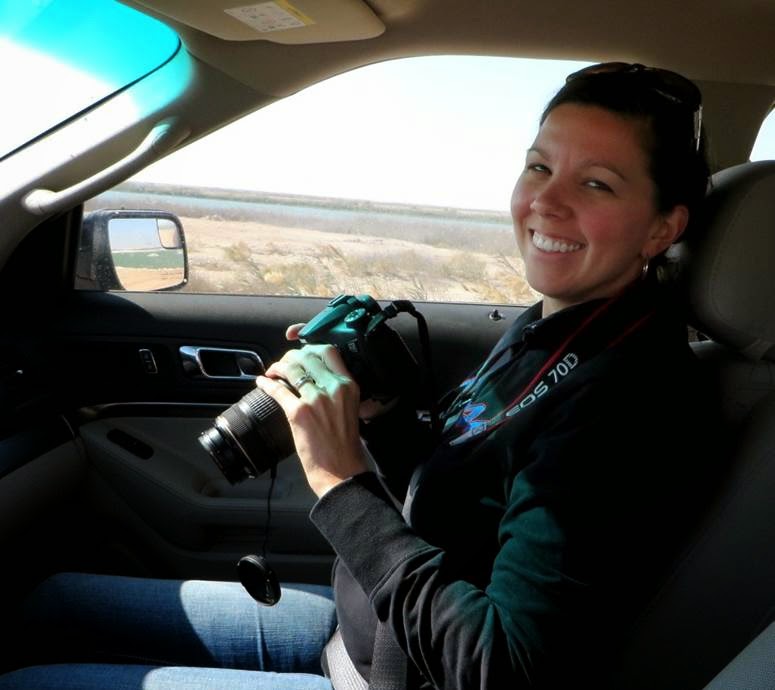
 
beautiful (ma sha allah!), knowledgeable guide Samantha Vidal
 
Through your guide's eyes you'll see tiny stick leg birds and cute little swimmers who immerse themselves in the nutrient rich waters. You'll learn about the cormorant's funky wing drying dance and how the red breasted grebe's feet are set behind his body which makes him a clumsy face planter on land.
 
stick leg bird
 
You'll tell bad poo jokes and laugh until maybe you pee a little.
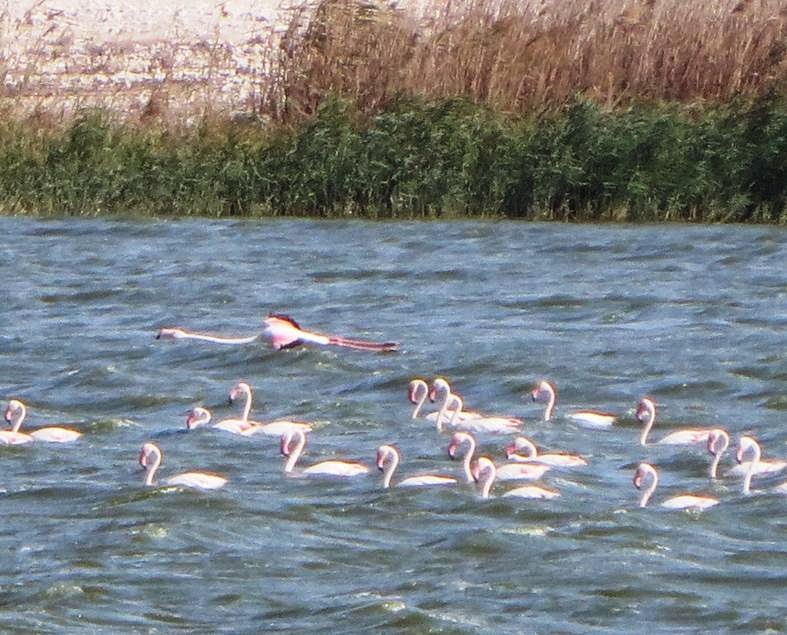
 
pretty pink flamingo flies!
 
Migrating birds don't care about oil, gas or sports. They're not interested in sponsorship, construction dates, contracts, how much money you make, what color you are or where you're from. Their only concern is nutrients in the water and getting a little R&R. To the birds, a pause at Qatar's sewage ponds is a sort of - potty break - in the middle of a long trip across the world.
 
bird R&R
 
Wear disposable shoes. Keep windows up. Breathe lightly and don't forget your camera. But (given the opportunity) definitely, absolutely, visit the ponds.
 
beautiful (ma sha allah!) guide takes pics
 
The birds are waiting.
 
 
*credit to Samantha Vidal for use of the technical term "poo-poo ponds"

Sunday, December 7, 2014

Treasure in the Sand (Not Oil)

desert rose
 
Qatar is known as the wealthiest country in the world, per capita. Here you'll find world class sporting events, resorts (under construction), stadiums (in the works), spas and restaurants (coming soon). Qatar is also surreal traffic, tower cranes, nepotism (wasta), prejudice, bias and pollution. Countrymen huddle behind 10 foot walls, no one, it seems, speaks the local language and there's no such thing as a Qatari restaurant.
 
seen in the desert
 
There are, however, remaining pockets of untouched earth. Where no one has marred the landscape with weird steel plates and called it "art," filled the sea with concrete or crumbled porous stone with trucks.
 
behind the wheel in Doha
 
To find this disappearing space you must venture far from the city's desalinated river of life. Past the tower cranes and thirsty trees, water and sand processing plants. Beyond Lagoona's zig zag buildings and West Bay's whacky high rises. Far from roads lined bumper to bumper with SUVs, rumbling concrete mixers, rebar loaded semis and the neon night where stars twinkle from party dhows that drift under strobing towers.
 
Here you'll find the under populated, plaster coated old neighborhoods of early Qatar.
 
(pic taken thru a dirty window)
 
Slide between the houses, majlis tents and mosques and aim for the desert. Continue to where the soft sand is a crisscrossed network of animal, foot and tire tracks. Where hills of porous rock slip into plains of earth and sky.
 
seen in the desert
 
When the only sign of civilization is the persistent trail of power lines and race camel farmers, search the sand for splotches of white sabkha salt flats and scattered amber disks.
 
Mary Anne, Ronita, Samantha, Cindi
desert rose hunting
 
This is the land of Qatar's desert roses.
 
 
"Desert Roses are found in areas of sabkha either lying on the surface or between the layers of wet and dry sand. These roses…are intricate, petal-like clusters of crystals, mostly composed of gypsum…"
Qatar Kaleidoscope, by Frances Gillespie
 
Desert Roses are not exclusive to Qatar; they're found in other hot, dry, sandy places, too, like Mexico, Morocco, Spain, Tunisia and Arizona. They are mineral formations, composed of gypsum (selenite) and barite, shaped when fine sand is trapped between mineral fibers and then crystallizes. Barite is the heavier mineral, while gypsum is more fragile and fibrous. A rose occurs when multiple discs adjoin at angles.
 
 
Gypsum roses are more commonly found in the Middle East, Southwest USA and Arizona. Barite roses are found in Oklahoma, England, Italy (and many other places). Because the mineral is softer, gypsum roses are more fragile appearing than barite roses.
 
Some believe the sharp but delicate objects have supernatural qualities that can neutralize bad energy, purify, heal.
 
"…Some of the inhabitants of the Sahara desert believe that what they call the 'Sand Rose' has an internal energy that is used for protection, prosperity and purification…"
 
In Qatar, the best formations are found in the desert's salt flats, deep in the heavy sand, where the earth is moist and cool. Dig carefully with gloved fingers and brushes to avoid nicking the sharp, but delicate leaves. The right locations yield an abundant supply of crystals.
 

"The (Qatar National Museum's)…striking design was inspired by the desert rose, an other-worldly mineral formation of crystallized sand found just beneath the desert's surface. The pavilion's sand-colored floors, walls and roofs resemble the sharp bladelike petals of the desert rose…"
 
In Qatar nothing is as it was. There are no more pearl divers. Salty sea water is desalinated, sand is processed, even the sun is filtered to assure arctic interiors as outside temperatures soar to somewhere between hell and death.
 
West Bay
 
Skyscrapers lord over a once vast expanse of camel spotted sand. Grocery stores feature potatoes from Australia, carrots from Philippines, apples from France and cheese from Lebanon. Qataris are a minority here - in fact, many expats have never met a local. Laborers, administrators, engineers, geologists, architects and the cable guy are flown in to mold and shape the environment to accommodate the Qatari vision.
 
It seems that nothing and no one is from Qatar.
 
 
Except (oil and) one rare and beautiful thing: the Qatari earth still shapes its own desert roses.
 
Ronita's desert treasure

Friday, May 30, 2014

Twelve Days in Doha: Adventure and Hot

silver and gold hangin' out in Doha
 
It's been a particularly warm May week in Doha with unseasonable temps exceeding 115F. Air like this translates to sweat drenched tee shirts, soggy undies, fogged glasses, beaded skin and high ponytails over rash prickled necks - before 9am.
 
West Bay skyline at night from our pool deck - not in the sun in Doha
 
Hot like this means a bright, yellow fireball halfway to the sky by 4am, burning sand, blazing sun, indoor activities and afternoon naps. Still, creative, dedicated gadabouts may find one or two interesting ways to entertain themselves. Like for example:
 
father/daughter shopping time
 
Wander shaded souk alleyways, bargain with shopkeepers and dig into stacks of plastic wrapped Pashminas as the bracelet maker melts colored blocks of wax; tour the gold/fabric/spice souks for jewelry, baskets, pans, dishes, tea and coffee sets, candy, jelabia, abaya, keffiya (deep breath) and more…
 
bargaining with the basket guy
 
Chat with camels beside a forever-under-renovation downtown fort, below a never ending line of sky infesting construction cranes, near a job site office full of interesting people from all over the world, especially Missouri…
 
some of the best buncha people ever
(missing Ben, Aaron, Tom-on vacay and Ed-who'd stepped away)
 
Eat, drink, cook, eat, read, wash dishes, eat, do laundry, eat, eat, eat.
 
"family room" at the shwarma place
 
Visit museums like the one dedicated to Mshiereb's Heart of Doha downtown renovation project (ie, our reason for being here), located on a barge docked along a tree and flower lined Corniche; view videos, pearl diving memorabilia and historical photos and a model of the gargantuan endeavor…
 
one of three fabulous works of art, created by Bob and Cindi
(genetics underwritten by Charlie and Peggy and Dan and Kitty)
 
Tour IM Pei's famous Museum of Islamic Art (MIA) to see cool stuff from the Middle East and beyond…
 
Kings and Pawns: Board Games from India to Spain
now at Doha's Museum of Islamic Art
 
See Sheikh Faisal Bin Qassim Al Thani's popular private collection of historic Qatari memorabilia and eclectic wonderment (click here to read more about the museum), including cars, planes, boats, tapestries, carpets, tents, a real well, swords, knives, photographs, paintings, doors, walls, Catholic vestments, a full sized confessional booth; and where an artist will ink your name in Arabic calligraphy for 10QR (about $2.50USD).
 
Mohammed animates Kimberly's name
 
The pyramid shaped Sheraton hotel is closed for remodeling but there are still skylines, Doha Bay dhows, Palm Tree Island, the Singing Dunes. There's beach day at 8:00am, sun kissed skin, salty seas, crossword puzzles. Katara's amphitheater, private art galleries, cart riding and cupcake eating in a cupcake shaped chair wearing let's-do-tea hats and skirts.
 
I like her
 
Indoor and outdoor pools, mani/pedis, Ferrari and Lamborghini; the Pearl, camel race track laps inside an air conditioned SUV, Our Lady of the Rosary Church outdoor grotto, stray cats, waterfalls, candles, prayer and wudu spaces, selfies.
 
in a bathroom at Sheikh Faisal's place
 
Tea in a Qatari home with sisters, cousins, nieces, new friends and Yemeni neighbors. Zubarah fort, sweaty desert treks, an archaeological site, artifact exhibit, sand and rock vistas, ancient walls, watch towers.
 
watch tower is coated with a light layer of concrete
as protection from sand and wind
 
Fanar, Shaheen's, Starbucks Frappuccino's, shwarma, tabbouleh, hummus, jasmine tea, Arabic coffee, food sharing at Turkey Central, lunch in a window-less backroom, waiting on Bob.
 
architectural demonstration: laying down the law, negotiation
 
Lessons in Islamic prayer and fasting during Ramadan in a Qatari home majlis surrounded by Qatari ladies and women from all over the world. Abayas, sheylas and the Ibn Abdul Wahhab Masjid - Doha's Grand Mosque.
 
inside the Ibn Abdul Wahhab Masjid, Doha's Grand Mosque
 
Because, after all, psshhhh, really, c'mon: what's a bit of blazing sky, sauna air, shimmering horizon and searing, scalding, burning sun when there's adventure to be lived?


"…Give the heavens above more than just a passing glance,
And when you get the choice to sit it out or dance: I hope you dance…"
- from "I Hope You Dance" written by Mark D. Sanders and Tia Sillers
popularly performed by Lee Ann Womack

Friday, May 9, 2014

Man of Steel, Qatar

East-West/West-East by Richard Serra
 
"…he did not simply set an artwork in a landscape but rather took account of a natural but structured space, paying exact attention to the scale of his addition to it…"
-Qatar Museums Authority brochure
 
You wander the desert, the sun heavy on your head. All around you is an endless field of earth and sky marching toward a horizon marked by strange mesa shaped sand and rock formations.
 
There is color in these mini mountains: reds, yellows and chocolate hued rock bits shaped like burned charcoal. The sand is velvet soft, light and easily carried by the wind. It collects in your ears, fills wrinkles, sneaks into your socks. Sweaty, gritty toes rub against one another and blister.
 
You climb a limestone plateau. Shoes disappear into the soft sand. The top of the mesa is flat, speckled with pockets of low lying green. You can see for miles in every direction.
 
Bob atop a limestone plateau
 
At one end, blue variegates from nearly white around the sun to icy blue at the place where sky meets sea. You look inland toward tiny, barely discernable bumps along the horizon that signal the village of Zekrit. Another direction reveals miles of desert brown fading into the dome above you.
 
At the final turn a dark thread rises out of the earth, streams heavenward. You slide down the mesa and aim that direction. The unfettered sun boils your skin, burns your eyes. You raise your arms and unsettled air shimmers in the textured atmosphere.
 
steel plate appears threadlike from the side

Yeah, it's hot. And there are no - none - trees. C'mon, what did you expect? You're doing walkabout in a (nearly) equatorial desert.
 
desert green
 
You slog toward the dark line and it seems to change: at first reed thin, it widens, opens, closes, flattens, at one point appears almost round.
 
But wait - you must be hallucinating. Two shapes, now three - is that a fourth peeking over the horizon?
 
You alter your approach and see that the forms are rectangular steel plates, one end buried in the sloping desert between two limestone plateau ranges. Each plate measures 4 meters by 13.5 cm. Two rise 14.7 meters into the burning, unforgiving sky while the other two soar 16.7 meters high. Due to the uneven topography each plate stands exactly the same height as the others and the surrounding mountains too. Face the end of a pillar and it's a piece of copper colored straw. Stand directly in front and the plate is wide and flat and the others disappear behind it. As you step to one side or the other, the pillars open like folds in a fan.
 
four plates, one car
 
The plates are a sculpture called East-West/West-East by artist and world renowned Man of Steel Richard Serra. The artist also created "7" - a vertical permanent structure set on a pier behind Doha's Museum of Islamic Art. Additional works are currently on exhibit at Katara and Alriwaq at MIA Park in Doha. (To learn more about Richard Serra and his work, click here: http://richardserraqatar.qa/en/)
 
Bob and 4 plates
 
A streak of rust mars the front and back of each evenly spaced pillar. Sun reflects off the steel, absorbs and transmits heat as it delineates distance in the endless field of rock and sand. On approach, just two plates are visible. Even though plates are the same height as the mountains that flank them they seem to roll up and fall back as you move forward.
 
"…it only takes on its full meaning when we walk its length and grasp its relationship to its site…"
-brochure
 
You walk the length of the exhibit, taking in the expanse of burning sand, basking in the dome of blue above and field of brown at your feet. You consider each towering copper hued structure, careful not to stand too close lest you absorb your limit of hot.
 
limestone plateaus
 
You wonder at the enormity of the project and marvel at the curiosity of four steel plates marching across the desert outback like giant rectangular Bedouins.
 
Finally, after a long drive, strenuous climb and sweaty wander, you shield your eyes and search the horizon. There are no "facilities" in wilderness galleries. Just sand, sky, rock, the stray shrub. You know: nature.

And - at this end of the desert, at least - steel.
 
 
East-West/West-East is located in the Brouq Nature Reserve on Qatar's thumb - a desert peninsula outside Zekrit along the country's Eastern coast. Take the Dukhan Road, exit toward Zekrit. Pass the Cuban Hospital, beyond the billowing oil wells and wind surfers…follow the road until it ends at the tiny beachside town. Now turn right and drive into the desert. Keep going until you see threads rising into the sky.
 
GPS Coordinates: N25°31.019'E050°51.948.

Friday, February 21, 2014

Upside Down Moon Watching

Qatari Moon, 2012
photo credit: Mary Toula Bacandreas Gentile
 
 
Sun casts a shadow on the moon

As the earth spins round and round.

Sometimes it seems the moon smiles up

Sometimes it grins upside down.
 
 
The moon looks different depending upon where you are in the world.  In the northern hemisphere, light shines on the moon from a clockwise direction, causing it to wax and wane from left to right.  In the southern hemisphere, light shines counter clockwise resulting in the opposite movement.
 
In the northern hemisphere, the first quarter looks like a growing D
while in the southern hemisphere it looks like a C
 
In places near-ish the equator, like Qatar, the first quarter of the moon grins upside down in an "n" shape while the last quarter smiles up in a "u."
 
What does the moon look like where you are?
 
Moon over Qatar
February 16, 2014
 
poem copyright 2014, Lucinda H. Kennaley
top photo credit to the illustrious and talented once-an-expat, Mary Toula Bacandreas Gentile.  Thanks, Mary!!